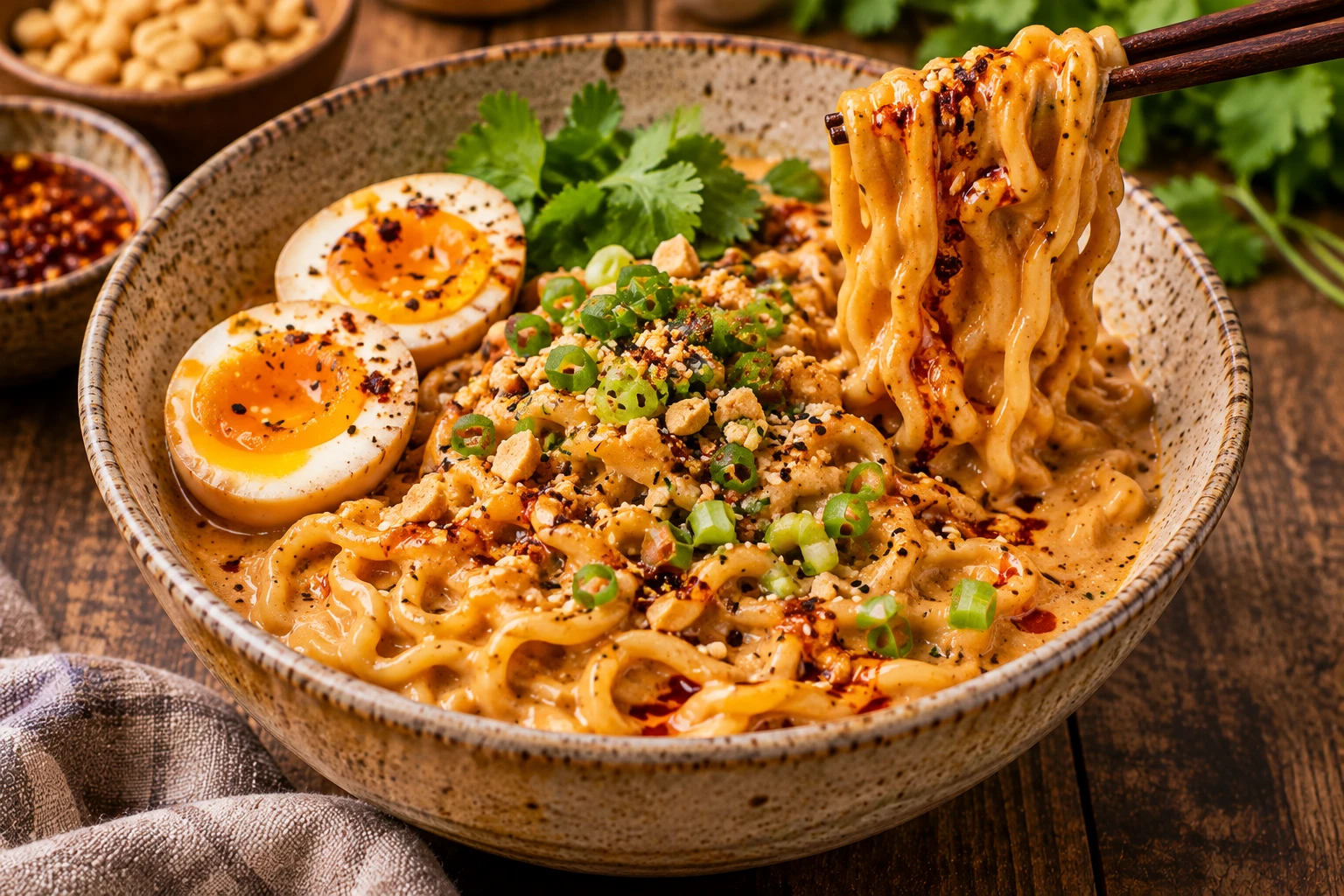
Peanut Butter Garlic Ramen with Chili Oil

A quick, creamy ramen bowl tossed in a savory peanut-garlic sauce with soy, sesame, and chili oil. Finish with scallions, sesame seeds, and a jammy egg for an easy weeknight meal.
Peanut Butter Garlic Ramen with Chili Oil
Prep time: 10 minutes | Cook time: 10 minutes | Servings: 2 | Difficulty: Easy
Introduction
Peanut Butter Garlic Ramen with Chili Oil turns a couple of packets of instant noodles into a quick bowl with a creamy, savory sauce and a little heat. Peanut butter gives the sauce body, soy sauce brings salt and umami, rice vinegar adds acidity, and sesame oil rounds out the flavor. Fresh garlic and ginger make the sauce aromatic, while chili crisp or chili oil gives it a spicy finish. The technique is simple: whisk the sauce in a bowl, cook the noodles, then loosen everything with starchy noodle water until it coats the strands.
Why You'll Enjoy This Recipe
This recipe is useful when you want a satisfying meal without simmering a broth or preparing many separate components. The sauce comes together while the water heats, and the noodles cook in just a few minutes. Peanut butter makes the texture creamy without needing dairy, and the balance of vinegar, honey, garlic, and soy keeps the sauce from tasting flat or overly rich. Chili crisp adds both heat and texture, especially when it contains crunchy aromatics. The optional eggs make the bowls more substantial, while scallions, sesame seeds, and peanuts add freshness and crunch.
Ingredients You'll Need
- 2 packs (about 6 oz / 170 g total) instant ramen noodles, seasoning packets discarded
- 2 tbsp creamy peanut butter
- 1½ tbsp soy sauce
- 1 tbsp chili crisp or chili oil, plus more to taste
- 1 tbsp rice vinegar
- 1 tsp toasted sesame oil
- 1 tsp honey or brown sugar
- 2 garlic cloves, finely grated or minced
- ½ tsp freshly grated ginger
- ¼ cup (60 ml) hot noodle cooking water, plus more as needed
- 2 tsp neutral oil
- 2 large eggs, optional
- 2 scallions, thinly sliced
- 1 tsp toasted sesame seeds
- 2 tbsp chopped roasted peanuts
- 1 tsp lime juice, optional
Use plain instant ramen noodles and discard the seasoning packets so you can control the salt and flavor yourself. Creamy peanut butter blends most easily; a natural variety may need extra whisking if its oil has separated. Soy sauce provides the main seasoning, so taste before adding any additional salt. Chili crisp varies widely in heat and salt, so begin with the listed tablespoon and add more at the table. Rice vinegar gives a clean tang, while honey or brown sugar rounds out the sauce. Reserve more noodle water than you think you need; the starch is what helps the sauce cling smoothly.
Equipment
small saucepan for eggs, medium pot for noodles, heatproof mixing bowl, whisk or fork, fine grater, skillet, tongs, measuring spoons, and colander.
How to Make the Recipe
Follow these steps in order. Prepare the ingredients before you begin, and use the visual and temperature cues as well as the timing to judge doneness.
- If serving with eggs, bring a small saucepan of water to a boil. Lower in eggs and simmer 7 minutes for jammy yolks or 9–10 minutes for firmer yolks. Transfer to ice water for 5 minutes, peel, and halve.
- In a heatproof bowl, whisk peanut butter, soy sauce, chili crisp, rice vinegar, sesame oil, honey, garlic, and ginger. Add 2 tablespoons hot water and whisk until smooth.
- Bring a medium pot of water to a boil. Cook ramen noodles according to package directions, usually 2–3 minutes, until just tender. Reserve ½ cup cooking water, then drain.
- Warm neutral oil in a large skillet over low heat. Add the peanut sauce and ¼ cup reserved noodle water; whisk until glossy and gently warmed, 30–60 seconds. Do not fry the garlic or let the sauce boil.
- Add drained noodles and toss with tongs until evenly coated. Add more noodle water, 1 tablespoon at a time, until the sauce clings smoothly to the noodles.
- Turn off heat. Stir in lime juice if using. Divide between bowls and top with scallions, sesame seeds, roasted peanuts, and extra chili oil.
- Add a halved egg to each bowl, if desired. Serve immediately while creamy and hot.
Tips and Troubleshooting
Whisk the peanut butter with the soy, vinegar, sesame oil, sweetener, garlic, ginger, and a little hot water before the noodles are ready. This prevents thick clumps from forming in the skillet. Cook ramen only until just tender; overcooked noodles can break as you toss them with the sauce. Before draining, reserve at least ½ cup of cooking water. Warm the sauce gently over low heat and never let it boil hard, because thick peanut sauce can catch on the pan and become pasty. Add noodle water one tablespoon at a time until the sauce looks glossy and coats the noodles. If it seems thin, toss for a few seconds; the sauce will cling as it cools slightly.
Use hot noodle water to emulsify the peanut sauce; add it gradually so the sauce stays silky rather than watery. Keep the skillet on low and remove from heat before the sauce gets too thick. Chili crisp varies in heat and salt, so start with 1 tablespoon and adjust.
Easy Variations
Almond butter or sunflower-seed butter can replace peanut butter, though the flavor will change. Use tamari for a gluten-free alternative to soy sauce, and choose noodles that meet your dietary needs. For a milder bowl, omit chili oil and finish with sesame oil; for more heat, add chili crisp at the table. Sautéed mushrooms, shredded carrots, baby spinach, tofu, or cooked chicken can turn the noodles into a more complete meal. If adding vegetables, cook them separately first so they do not release excess water into the peanut sauce.
Use almond or sunflower-seed butter instead of peanut butter; tamari or coconut aminos instead of soy sauce (adjust salt); lime juice instead of rice vinegar; udon or rice noodles instead of ramen (cook according to package). Add sautéed mushrooms, shredded carrots, spinach, tofu, or leftover cooked chicken for a fuller meal.
What to Serve With It
Serve immediately in warm bowls while the sauce is silky. Top with sliced scallions, sesame seeds, chopped roasted peanuts, and extra chili oil. A halved jammy egg adds richness, while a squeeze of lime gives the finished noodles a fresh edge. If you want a side, choose something crisp and light such as cucumber slices, quick-pickled vegetables, or steamed greens. The noodles are rich, so a bright, crunchy accompaniment helps balance the meal.
Make-Ahead, Storage, and Reheating
Best eaten immediately. Refrigerate leftover noodles in an airtight container up to 2 days. The sauce thickens when cold; reheat in a skillet over low heat with 1–2 tablespoons water, tossing until hot. Microwave covered in 30-second intervals with a splash of water, stirring between. Store eggs separately and use within 3 days.
Frequently Asked Questions
Can I make this ramen without chili oil?
Yes. Omit it for a mild peanut-garlic sauce, or use a small pinch of red pepper flakes and a little extra sesame oil.
How do I keep peanut sauce from becoming too thick?
Reserve noodle water and whisk it into the sauce a tablespoon at a time. Starchy water helps the sauce coat the noodles smoothly.
Closing Thoughts
Keep this peanut butter garlic ramen in mind for busy evenings when you want a fast meal with a sauce that tastes more considered than its short ingredient list suggests. The important technique is using starchy noodle water to bring the sauce together. Make it just before serving, adjust the chili to your preference, and finish with fresh scallions and crunchy toppings for contrast.
Ready to make something?
Turn inspiration into dinner.
Browse our tested recipes for practical step-by-step ideas, weeknight favorites and something delicious to try next.
Find your next recipe →Helpful Tools for This Recipe
Disclosure: Affiliate disclosure: This post contains affiliate links. As an Amazon Associate I earn from qualifying purchases at no extra cost to you.
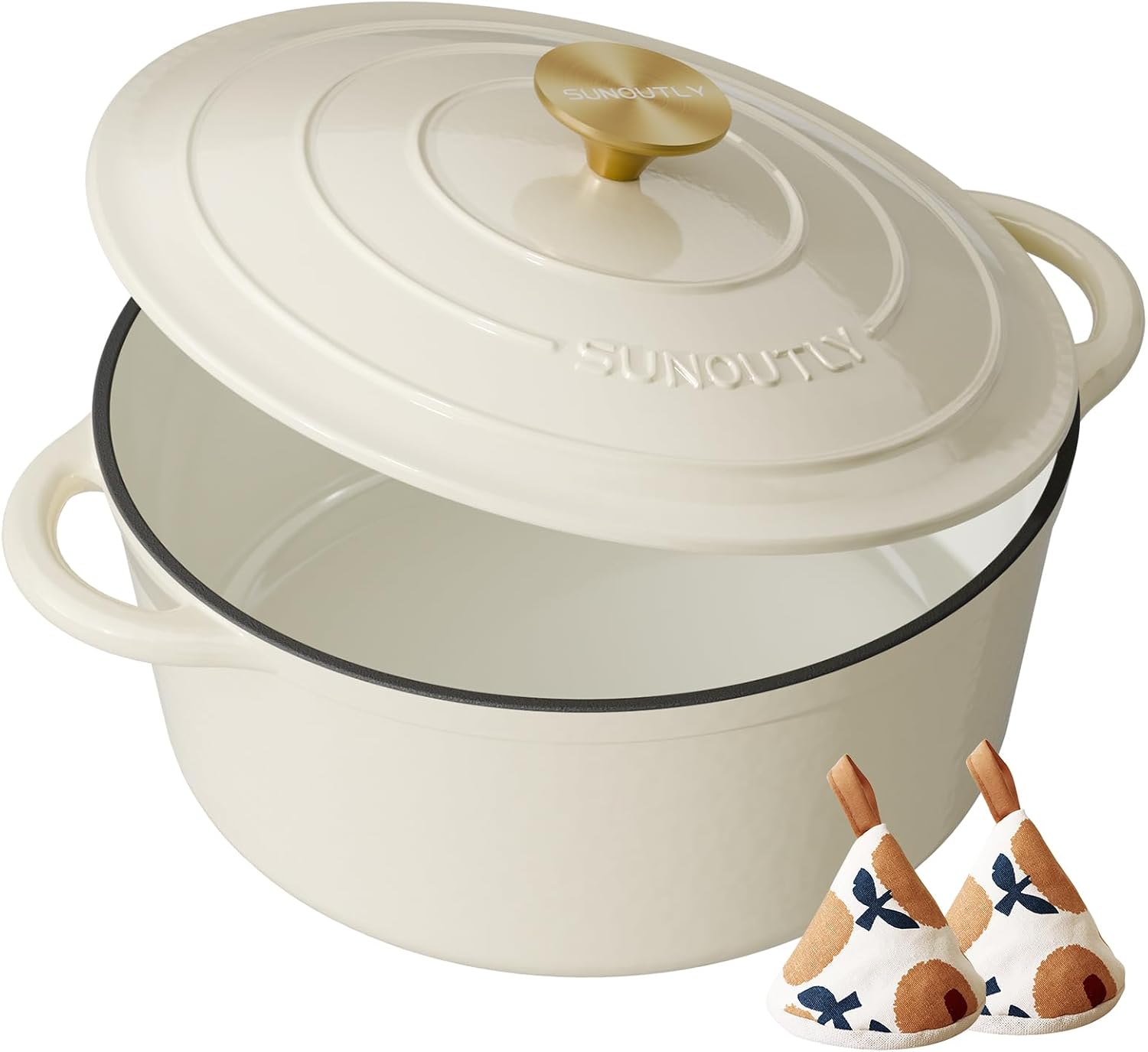 (paid link)
Enameled Cast Iron Dutch Oven (6-Quart)
Essential for simmering hearty soups, braising meats, and deep-browning chili without hot spots.
 (paid link)
Heat-Resistant Seamless Silicone Spatula Set
Withstands up to 450°F and scrapes nonstick pans cleanly without scratching protective coatings.