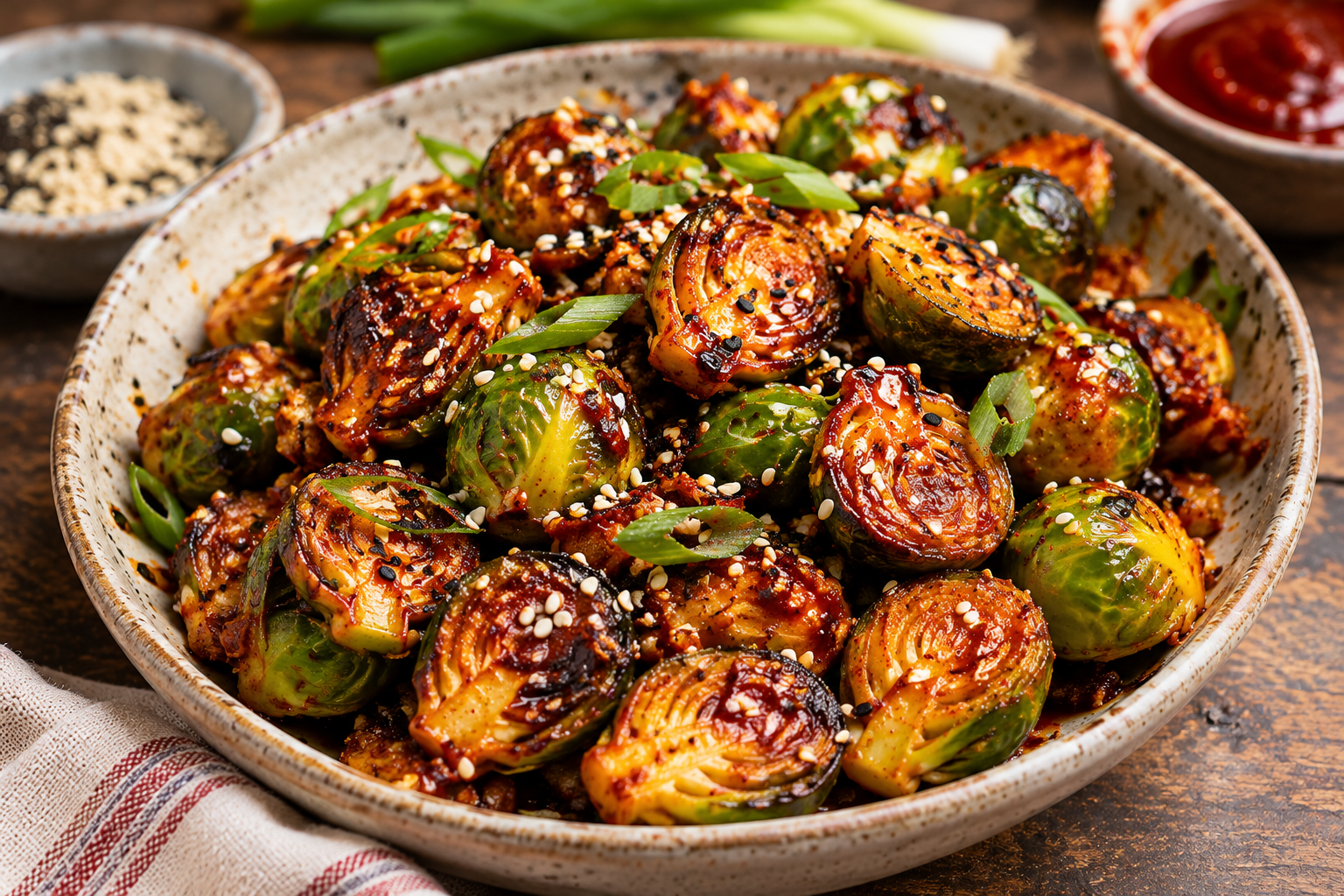
Gochujang Honey-Glazed Brussels Sprouts with Crispy Sesame

Roasted Brussels sprouts turn deeply golden before being tossed in a glossy gochujang-honey glaze with garlic, ginger, sesame, and scallions. A sweet-spicy side dish with crisp edges and tender centers.
Gochujang Honey-Glazed Brussels Sprouts with Crispy Sesame
These gochujang honey-glazed Brussels sprouts bring together crisp, browned edges, tender centers, and a glossy sauce that balances sweet, savory, tangy, and gently spicy flavors. The sprouts are roasted first so their natural sweetness develops in the oven. Only after they are deeply golden are they tossed with a quick glaze made from Korean gochujang, honey, soy sauce, rice vinegar, sesame oil, garlic, and fresh ginger. Toasted sesame seeds and sliced scallions finish the dish with crunch and freshness.
The method is intentionally simple: give the vegetables enough space on a hot baking sheet, make the glaze while they roast, and combine everything just before serving. This recipe makes four side-dish servings and takes about 35 minutes from start to finish. It works beside weeknight rice bowls, roasted chicken, grilled tofu, or a larger holiday spread. Because the glaze is added near the end, you get roasted flavor without exposing the honey to the oven for the entire cooking time.
Why You’ll Enjoy This Recipe
A balance of bold flavors. Gochujang contributes fermented chili depth rather than heat alone. Honey softens its savory spice, soy sauce adds saltiness, and rice vinegar keeps the glaze lively. Sesame oil, garlic, and ginger make the finish fragrant without requiring a long marinade.
Roasting creates better texture. Brussels sprouts can become soft when crowded or covered in sauce too early. Roasting them in a single layer allows moisture to escape and helps the cut surfaces caramelize. The glaze goes on after that browning has happened.
The heat is adjustable. Gochujang brands differ in spice and salt levels. Begin with less if you prefer a mild result, then taste the warmed glaze and add more. You can also add a little extra honey for sweetness or rice vinegar for brightness.
It is practical for different meals. The sprouts are substantial enough for a holiday side but quick enough for a weeknight dinner. Their sweet-savory profile pairs especially well with plain rice, noodles, and simply seasoned proteins.
Ingredients You’ll Need
Brussels sprouts (1½ lb / 680 g): Trim the dry stem ends, remove damaged outer leaves, and halve the sprouts lengthwise. Quarter especially large ones so all the pieces finish at roughly the same time. Dry them thoroughly after washing; wet surfaces steam instead of browning.
Neutral oil (1½ tablespoons), kosher salt (½ teaspoon), and black pepper (¼ teaspoon): This simple coating helps the sprouts roast evenly. Choose avocado, canola, or vegetable oil, all of which are suitable for the high oven temperature.
Gochujang (2 tablespoons) and honey (1½ tablespoons): Gochujang is a Korean fermented chili paste with savory depth and variable heat. Honey balances it and helps the glaze turn glossy. For a milder result, start with 1 tablespoon gochujang and add more after tasting.
Low-sodium soy sauce (1 tablespoon), rice vinegar (2 teaspoons), and toasted sesame oil (1 teaspoon): Soy sauce seasons the glaze, rice vinegar cuts through its sweetness, and sesame oil provides a nutty aroma. Use tamari if you need a gluten-free alternative, and check the gochujang label as well.
Garlic (1 small clove), fresh ginger (1 teaspoon), and water (1 tablespoon, plus more if needed): Finely grate or mince the garlic and ginger so they distribute evenly. Water loosens the thick chili paste into a coating consistency without adding extra salt or sweetness.
Sesame seeds (1 tablespoon) and scallions (2): Lightly toast the sesame seeds until fragrant and slice the scallions thinly. Add both at the end so they keep their texture and fresh flavor.
Equipment
Use a large rimmed baking sheet, a mixing bowl, a small saucepan, a whisk, a chef’s knife, a cutting board, measuring spoons, and a spatula or tongs. A large baking sheet matters: if the sprouts are packed tightly together, trapped steam prevents browning. Use two pans if necessary. A bare metal pan generally browns the cut sides well; parchment is useful for easier cleanup but can slightly reduce direct contact with the hot metal.
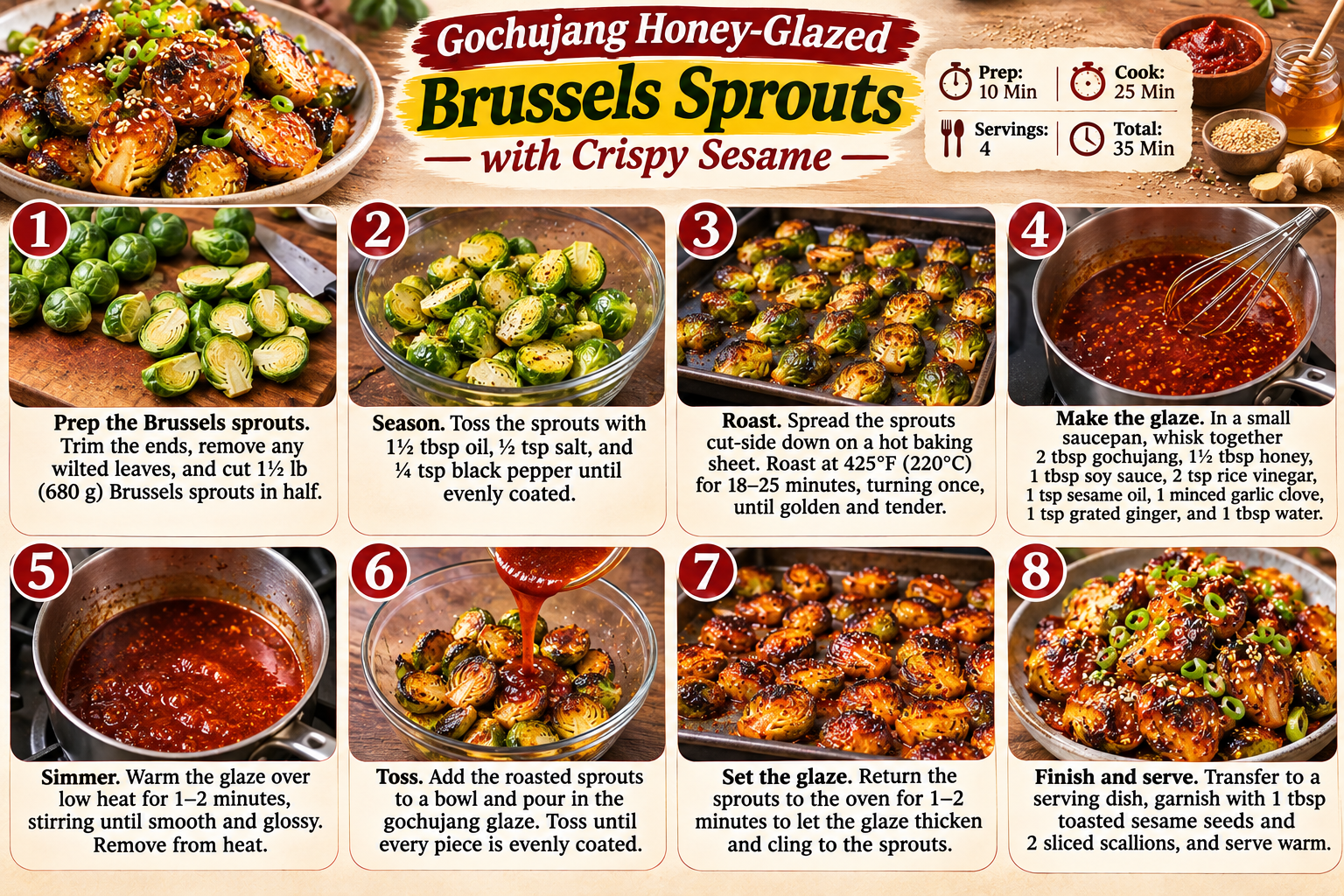
How to Make Gochujang Honey-Glazed Brussels Sprouts
- Heat the oven and pan. Set the oven to 425°F (220°C). Place the large rimmed baking sheet inside while the oven heats. Starting with a hot pan helps the cut sides begin browning as soon as the sprouts touch it.
- Prepare the sprouts. Trim the stems, remove damaged leaves, and halve the sprouts lengthwise. Quarter unusually large pieces. Pat them dry with a clean towel so surface water does not interfere with roasting.
- Season and arrange. Toss the sprouts with 1½ tablespoons neutral oil, ½ teaspoon kosher salt, and ¼ teaspoon black pepper. Carefully spread them over the hot pan in one layer, placing as many cut sides down as possible. Leave space between pieces.
- Roast until browned. Roast for 18–25 minutes, turning once after about 15 minutes. Look for deeply golden cut surfaces, crisp outer leaves, and centers that are tender when pierced with a fork. Start checking at 18 minutes because smaller sprouts cook faster.
- Make the glaze. While the sprouts roast, whisk 2 tablespoons gochujang, 1½ tablespoons honey, 1 tablespoon low-sodium soy sauce, 2 teaspoons rice vinegar, 1 teaspoon toasted sesame oil, the grated garlic, 1 teaspoon ginger, and 1 tablespoon water in a small saucepan. Warm over low heat for 1–2 minutes, stirring until smooth and glossy. Do not boil hard. Add another 1–2 teaspoons water if it is too thick.
- Coat the hot sprouts. Transfer the roasted sprouts to a large heatproof bowl. Add the glaze gradually and toss until lightly coated. You may not need every drop. Taste and adjust with a little rice vinegar for brightness or honey for sweetness.
- Set the glaze briefly. Return the coated sprouts to the baking sheet for 1–2 minutes in the oven, watching closely so the honey does not burn. Skip this step if you prefer a softer, stickier coating.
- Garnish and serve. Transfer to a serving dish and sprinkle with 1 tablespoon toasted sesame seeds and 2 thinly sliced scallions. Serve promptly while the edges are at their crispest.
Tips and Troubleshooting
Dry the sprouts before roasting. After rinsing, dry them well with a clean towel. Moisture on the surface turns to steam and makes it harder for the cut sides to brown. If you wash them ahead, refrigerate them uncovered or loosely covered until dry.
Do not crowd the baking sheet. Each piece needs contact with the hot pan and a little room around it. If the sprouts overlap, they release moisture into the pan and soften. Two baking sheets are better than one overloaded sheet.
Put the cut sides down. This increases contact with the pan and encourages the deep golden surfaces that provide much of the dish’s flavor. Turn them only once the first side has had time to brown.
Glaze after roasting. Honey can darken or burn during a long roast. Adding the glaze after the sprouts are tender protects its flavor and lets you control how heavily each piece is coated.
Adjust the sauce gradually. Gochujang varies by brand. Taste a small amount of the warmed glaze before tossing it with the vegetables. If it is too spicy or salty, add a little honey or water; if it tastes too sweet, add a few drops of rice vinegar.
Serve soon after finishing. The glaze adds moisture, so the crisp edges gradually soften. For the best contrast, garnish and bring the dish to the table soon after tossing.
Easy Variations
For a milder version, use 1 tablespoon gochujang at first and increase it only if you want more heat. For a vegan variation, replace honey with maple syrup and check that the gochujang is vegan. For a gluten-free version, use certified gluten-free tamari instead of soy sauce and verify that the chili paste is gluten-free. Apple cider vinegar can stand in for rice vinegar in the same quantity if needed. You can replace sesame seeds with toasted chopped peanuts or cashews, although the flavor will change; omit the sesame oil too if you are avoiding sesame. A pinch of red pepper flakes can add extra heat, but taste the gochujang before adding any.
What to Serve With It
Serve these sprouts with steamed rice, brown rice, or noodles to catch any extra glaze. They complement simply seasoned salmon, chicken, pork, or crisp tofu because the sweet-spicy sauce supplies much of the seasoning. For a Korean-inspired meal, add rice, cucumber salad, and a protein with a mild soy or sesame dressing. On a holiday table, they make a lively contrast to roasted meats, mashed potatoes, or other rich sides. Keep the rest of the meal relatively simple so the gochujang flavor remains noticeable.
Make-Ahead, Storage, and Reheating
You can trim and halve the Brussels sprouts up to two days ahead. Store them in an airtight container in the refrigerator and dry them again if condensation forms. The glaze can be whisked together a day ahead and refrigerated; warm it gently in a small saucepan before using. For the best texture, roast and glaze the sprouts shortly before serving rather than fully cooking them in advance.
Refrigerate leftovers in an airtight container within two hours and use them within 3–4 days. Reheat in a 400°F (200°C) oven or air fryer for 5–8 minutes, spreading the sprouts in a single layer until hot. A microwave is convenient but softens the edges. If you reserved extra glaze, store it separately and toss it with the sprouts after reheating. Freezing is not recommended because thawed Brussels sprouts become soft and watery.
Frequently Asked Questions
Can I prepare the Brussels sprouts ahead of time?
Yes. Trim and halve them up to two days ahead, then refrigerate in an airtight container. You can also mix the glaze a day ahead. Roast and toss everything shortly before serving for the best texture.
How do I keep the sprouts from getting soggy?
Dry them well, preheat the baking sheet, roast at 425°F (220°C), and leave space between the pieces. Wait until they are browned before adding the glaze, and serve promptly.
Is gochujang very spicy?
Its heat varies by brand. Gochujang is also savory and fermented, not simply hot. Start with 1 tablespoon for a gentler glaze, taste it, and add more if you prefer a stronger chili flavor.
Can I make this recipe gluten-free or vegan?
For gluten-free sprouts, use certified gluten-free tamari and check the gochujang label. For a vegan version, replace honey with maple syrup and confirm that the chili paste and other condiments meet your needs.
A Bold, Easy Side Dish Worth Repeating
These gochujang honey-glazed Brussels sprouts show how a few well-chosen ingredients can turn a familiar vegetable into a memorable side. Roasting first builds the browned edges, while the quick glaze brings savory chili flavor, sweetness, acidity, and sesame aroma. Keep the pan uncrowded, add the sauce at the end, and finish with sesame seeds and scallions just before serving. The result is colorful, full of contrast, and easy to pair with both everyday dinners and special meals.
Ready to make something?
Turn inspiration into dinner.
Browse our tested recipes for practical step-by-step ideas, weeknight favorites and something delicious to try next.
Find your next recipe →Helpful Tools for This Recipe
Disclosure: Affiliate disclosure: This post contains affiliate links. As an Amazon Associate I earn from qualifying purchases at no extra cost to you.
 (paid link)
Pre-Seasoned Cast Iron Skillet (10.25-inch)
Provides exceptional heat retention and unbeatable browning for chicken, steaks, and skillet pastas.
 (paid link)
Heat-Resistant Seamless Silicone Spatula Set
Withstands up to 450°F and scrapes nonstick pans cleanly without scratching protective coatings.
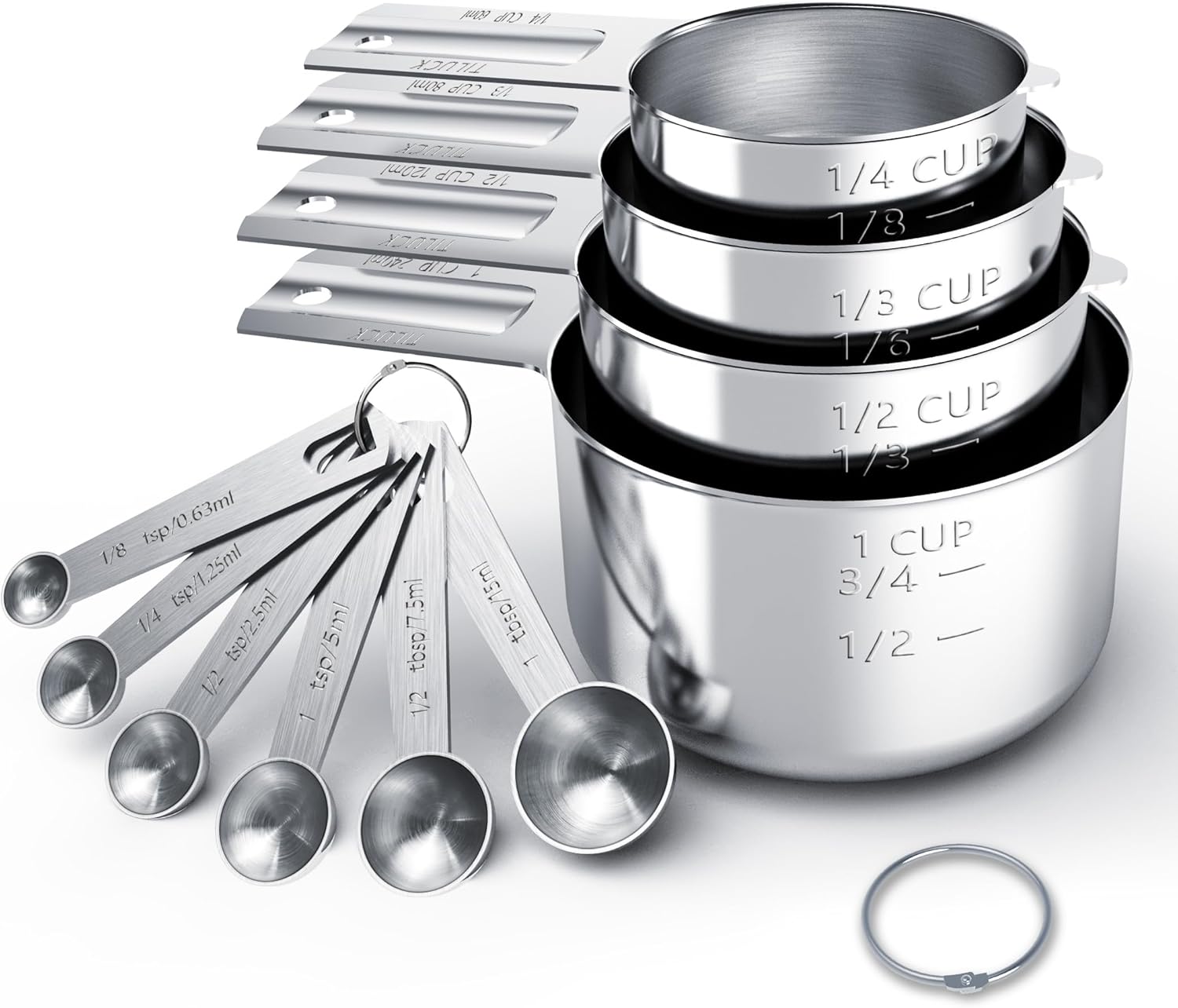 (paid link)
Heavy-Gauge Stainless Steel Measuring Cups & Spoons
Etched measurement markings never fade through dishwashing, ensuring precise seasoning balance.