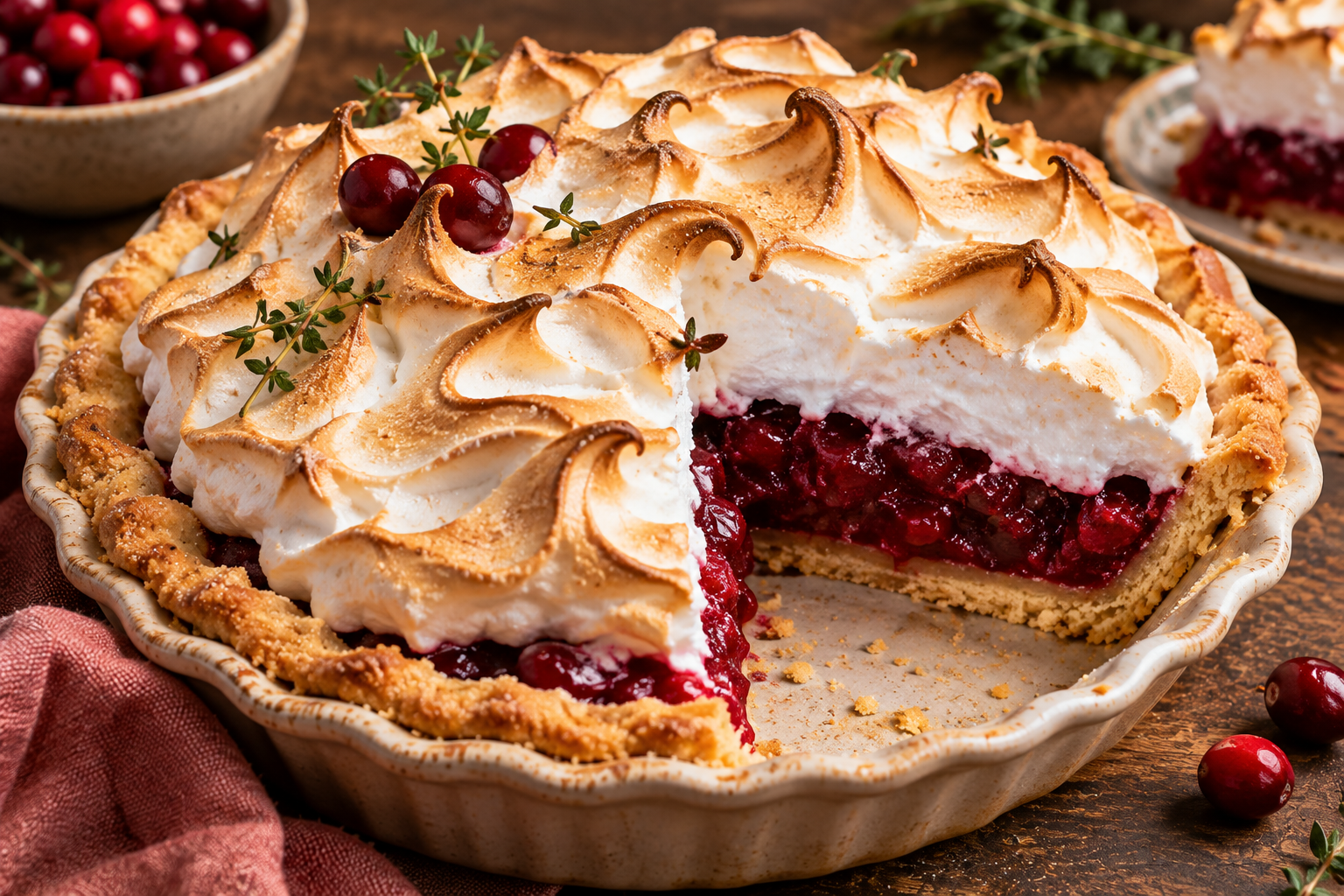
Cranberry Meringue Pie with Buttery Shortbread Crust

A smooth, tangy cranberry-orange curd sits in a buttery shortbread crust beneath a glossy toasted Swiss meringue. This make-ahead pie balances bright fruit flavor with a crisp base and soft peaks.
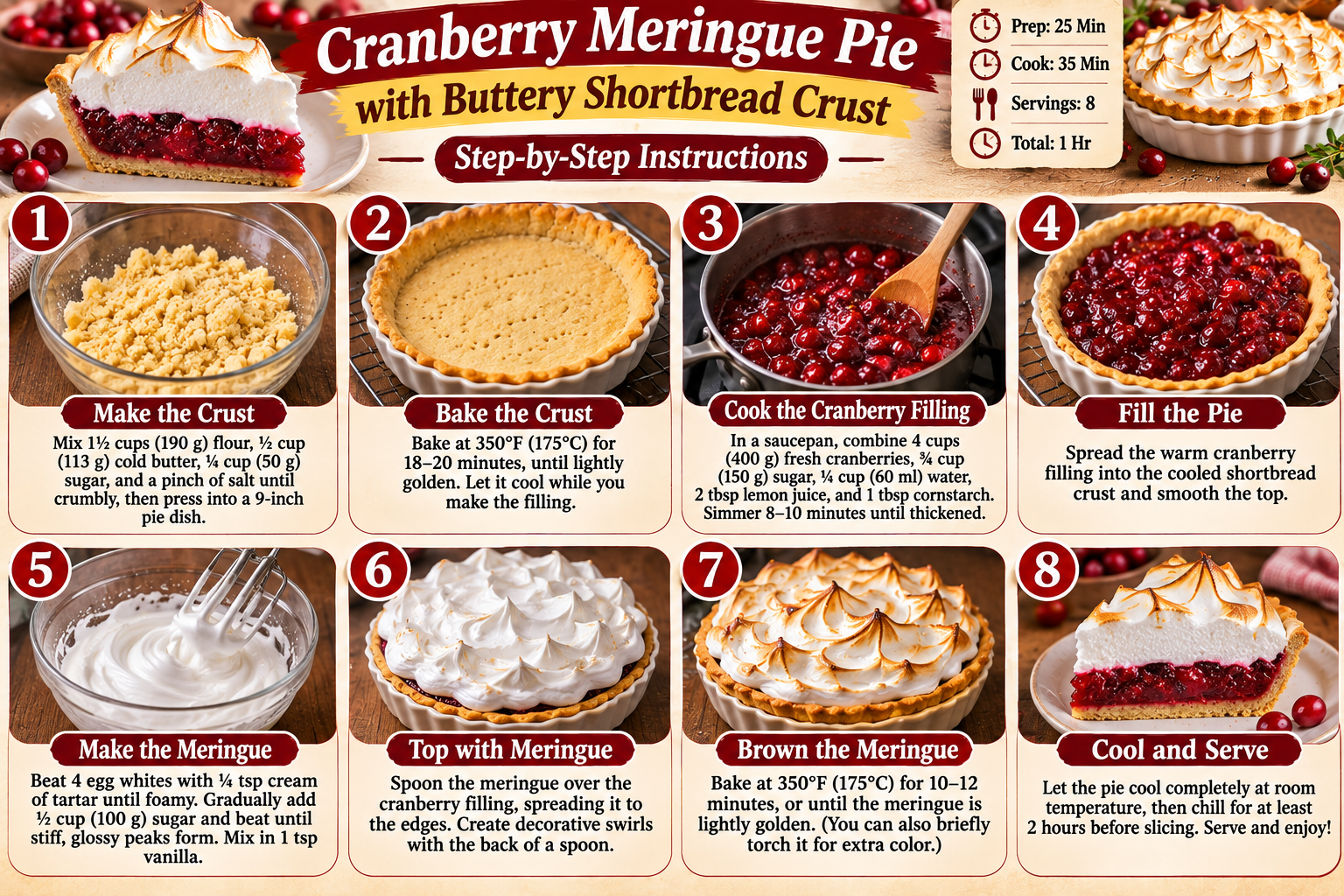
Cranberry Meringue Pie with Buttery Shortbread Crust
This cranberry meringue pie layers three distinct textures and flavors: a tender, buttery shortbread crust, a smooth cranberry-orange curd with a pleasantly tart finish, and a cloud of glossy toasted meringue. Cranberries bring a vivid color and sharp fruit flavor, while sugar and orange soften their intensity. The filling is cooked until thick, poured into the baked crust, and chilled until firm. Just before serving, a Swiss-style meringue is whipped into glossy peaks and lightly toasted.
The recipe makes one 9-inch pie, serving about eight people. It is a useful dessert for a holiday meal or any occasion when you want a fruit-forward alternative to a very sweet pie. It does require cooling and chilling time, so plan ahead: the crust and cranberry filling can be made the day before, while the meringue is best prepared and toasted closer to serving. The important sequence is to cool the filling completely before adding the meringue and to heat the egg-white mixture to 160°F (71°C) before whipping.
Why You’ll Enjoy This Recipe
It balances tart fruit with a rich base. Cranberries have a naturally sharp flavor. Cooking them with sugar and water creates a concentrated puree, while orange zest and juice add fragrance and round out the acidity. The buttery crust gives each slice a mellow, crumbly contrast.
The layers have different textures. The shortbread base is firm and tender, the curd is smooth and sliceable, and the meringue is light with a delicate toasted exterior. Letting the filling chill before topping helps each layer stay distinct.
Much of the work can be done ahead. The crust and filling can be prepared and chilled up to a day before serving. Making the meringue later means it looks fresh and keeps its soft peaks for the table.
It is adaptable without changing the method. Frozen cranberries work just as well as fresh, and lemon zest can replace orange if that is what you have. The recipe also explains how to check the meringue rather than relying only on appearance.
Ingredients You’ll Need
All-purpose flour (1½ cups / 190 g), granulated sugar (¼ cup / 50 g), and fine salt (¼ teaspoon): These form the shortbread crust. The modest amount of sugar keeps the base buttery rather than overly sweet.
Cold unsalted butter (½ cup / 113 g), 1 egg yolk, and 1–2 tablespoons cold water: Cold butter creates a tender, crumbly crust. The yolk helps bind the dough. Add water gradually; use only enough for the mixture to hold together when pressed.
Cranberries (2½ cups / 250 g), sugar (¾ cup / 150 g), and water (½ cup / 120 ml): Fresh or frozen cranberries can be simmered directly with the sugar and water until they burst. The mixture is then strained to remove skins and seeds for a smooth curd.
Eggs (2 large) and egg yolks (2 large): These enrich and thicken the cranberry filling. Whisk them smoothly before adding the warm puree, and keep whisking while the curd cooks to prevent scrambled bits.
Cornstarch (2 tablespoons / 16 g), butter (2 tablespoons / 28 g), orange zest (1 tablespoon), orange juice (1 tablespoon), and salt (¼ teaspoon): Cornstarch helps the curd set, butter gives it a silky finish, and orange brightens the cranberries. Use finely grated zest without the bitter white pith.
Egg whites (4 large), sugar (1 cup / 200 g), cream of tartar (¼ teaspoon), and vanilla (½ teaspoon): These make the Swiss meringue. The sugar dissolves over gentle heat with the egg whites, then the mixture is whipped until glossy and stiff. Cream of tartar helps stabilize the foam.
Equipment
You will need a 9-inch pie plate, mixing bowls, a saucepan, a fine-mesh sieve, a whisk, parchment paper, pie weights or dried beans, an instant-read thermometer, and an electric mixer. A kitchen torch gives precise control when toasting the meringue; a broiler also works if you watch the pie continuously. An offset spatula or the back of a spoon makes it easier to shape decorative peaks.
How to Make Cranberry Meringue Pie
- Prepare the oven and pie plate. Heat the oven to 350°F (175°C) and lightly grease a 9-inch (23 cm) pie plate. If using frozen cranberries, keep them frozen until they go into the saucepan.
- Mix the shortbread dough. Whisk 1½ cups flour, ¼ cup sugar, and ¼ teaspoon salt. Cut in ½ cup cold cubed butter until coarse crumbs form. Mix in 1 egg yolk and 1 tablespoon cold water. Add the second tablespoon only if the dough still will not hold together when pressed.
- Press and bake the crust. Press the dough evenly over the bottom and up the sides of the pie plate. Prick the base with a fork, line it with parchment, and add pie weights or dried beans. Bake for 15 minutes. Remove the weights and parchment, then bake another 8–10 minutes until lightly golden. Cool while you make the filling.
- Cook the cranberries. Combine 2½ cups cranberries, ¾ cup sugar, and ½ cup water in a saucepan. Simmer over medium heat for 8–10 minutes, stirring occasionally, until the berries burst and soften.
- Strain the puree. Press the hot cranberry mixture through a fine-mesh sieve into a bowl, scraping the underside of the sieve to collect the puree. Discard the skins and seeds. Measure about 1½ cups smooth puree; add a little water if you are slightly short.
- Prepare the curd mixture. In a heatproof bowl, whisk 2 eggs, 2 egg yolks, 2 tablespoons cornstarch, 1 tablespoon orange zest, 1 tablespoon orange juice, and ¼ teaspoon salt until smooth. Gradually whisk in the warm cranberry puree.
- Thicken the filling. Return the mixture to the saucepan. Cook over medium-low heat, whisking constantly, for 4–6 minutes until thick and gently bubbling. Remove from the heat and whisk in 2 tablespoons butter until melted.
- Fill and chill the pie. Pour the hot curd into the cooled crust and smooth the top. Bake at 350°F (175°C) for 8–10 minutes to help set the filling. Cool completely, then refrigerate for at least 2 hours until firm.
- Heat the meringue mixture. Shortly before serving, combine 4 egg whites, 1 cup sugar, and ¼ teaspoon cream of tartar in a clean heatproof bowl set over gently simmering water. Whisk constantly until the sugar dissolves and the mixture reaches 160°F (71°C), about 4–6 minutes.
- Whip until glossy. Remove the bowl from the heat. Beat on medium-high with an electric mixer until glossy, stiff peaks form and the bowl is no longer warm, about 5–8 minutes. Beat in ½ teaspoon vanilla.
- Top and toast. Pile the meringue over the chilled pie, spreading it to touch the crust edge so it seals the filling. Create peaks with the back of a spoon. Toast with a kitchen torch or broil 6–8 inches from the element for 30–90 seconds, watching constantly.
- Rest and slice. Let the pie rest for 10 minutes before slicing with a clean knife. Keep it refrigerated and serve chilled or cool.
Tips and Troubleshooting
Use only as much water as the crust needs. The dough should hold together when squeezed but should not feel wet or sticky. Too much water can make the crust tougher. Pressing the dough directly into the pie plate avoids the need to roll a delicate shortbread pastry.
Strain the cranberry mixture thoroughly. Pressing the cooked berries through a fine-mesh sieve removes skins and seeds and gives the curd its smooth texture. Scrape the underside of the sieve so you do not leave usable puree behind.
Whisk the curd continuously. Keep the heat moderate and whisk across the bottom and corners of the saucepan. Constant movement helps the eggs thicken the mixture evenly rather than forming small cooked pieces. The filling should become visibly thick before it goes into the crust.
Cool the filling completely before topping. Warm curd can soften the meringue from underneath and make it slide. The two-hour chill is not optional if you want clean slices and distinct layers.
Use a thermometer for the Swiss meringue. The egg whites and sugar should reach 160°F (71°C), with the sugar dissolved, before whipping. Make sure the bowl and beaters are clean and free of grease; even a little fat can prevent the whites from reaching full volume.
Toast carefully. Meringue can color very quickly under a broiler. Keep the pie close enough to brown but watch continuously, rotating if needed. A kitchen torch gives more controlled color and lets you keep the pie away from the oven’s heat.
Easy Variations
Use lemon zest and juice in place of orange for a sharper citrus note. If you prefer a slightly less tart filling, adjust the sweetness only after tasting the strained cranberry puree; avoid changing the egg or cornstarch quantities, which help the curd set. For a gluten-free crust, use a reliable cup-for-cup gluten-free flour blend and check that it is suitable for pressed shortbread-style dough. Frozen cranberries can be used without thawing. If using plain unsweetened cranberry puree instead of whole berries, adjust the sugar to taste and keep the final puree quantity close to the recipe’s target.
What to Serve With It
This pie is rich enough to serve on its own, but a small spoonful of softly whipped cream can suit guests who prefer a less tart bite. Serve it after a meal with roasted poultry, a holiday roast, or a lighter dinner where the cranberry flavor feels seasonal. Coffee or unsweetened tea balances the sweet meringue. Because the pie has a bright fruit filling, it also works well after a meal with creamy or savory dishes.
Make-Ahead, Storage, and Reheating
The crust and cranberry filling can be prepared up to one day ahead. Bake the crust, make the curd, fill the crust, cool it, and refrigerate the pie covered. Prepare and toast the meringue shortly before serving for the best appearance and texture. Meringue can soften or weep as it sits, so avoid topping the pie too far in advance.
Keep the finished pie refrigerated and covered, and use it within two days. Do not leave it at room temperature for more than two hours. This pie is not a good candidate for freezing once assembled because the curd and meringue textures can change after thawing. There is no reheating step; serve chilled or cool. Wipe the knife between slices for cleaner cuts through the meringue and filling.
Frequently Asked Questions
Can I make cranberry meringue pie ahead?
Yes. Bake the crust and prepare the cranberry filling up to one day ahead. Chill the filled pie, then make and toast the meringue shortly before serving.
How do I know the meringue is ready?
The egg-white mixture should reach 160°F (71°C) and the sugar should dissolve before whipping. Beat until the meringue is glossy and holds stiff peaks. The bowl should no longer feel warm.
Can I use frozen cranberries?
Yes. Add them directly to the saucepan without thawing. They may need a minute or two longer to burst and soften.
A Bright, Make-Ahead Dessert for Sharing
Cranberry meringue pie is all about contrast: tart fruit against buttery pastry, smooth curd under airy meringue, and a lightly toasted top over a chilled filling. Give the crust time to cool, strain the cranberries for a silky result, and use a thermometer to prepare the Swiss meringue with confidence. With the base and filling made ahead, the final topping becomes a simple finishing step before the pie reaches the table.
Ready to make something?
Turn inspiration into dinner.
Browse our tested recipes for practical step-by-step ideas, weeknight favorites and something delicious to try next.
Find your next recipe →Helpful Tools for This Recipe
Disclosure: Affiliate disclosure: This post contains affiliate links. As an Amazon Associate I earn from qualifying purchases at no extra cost to you.
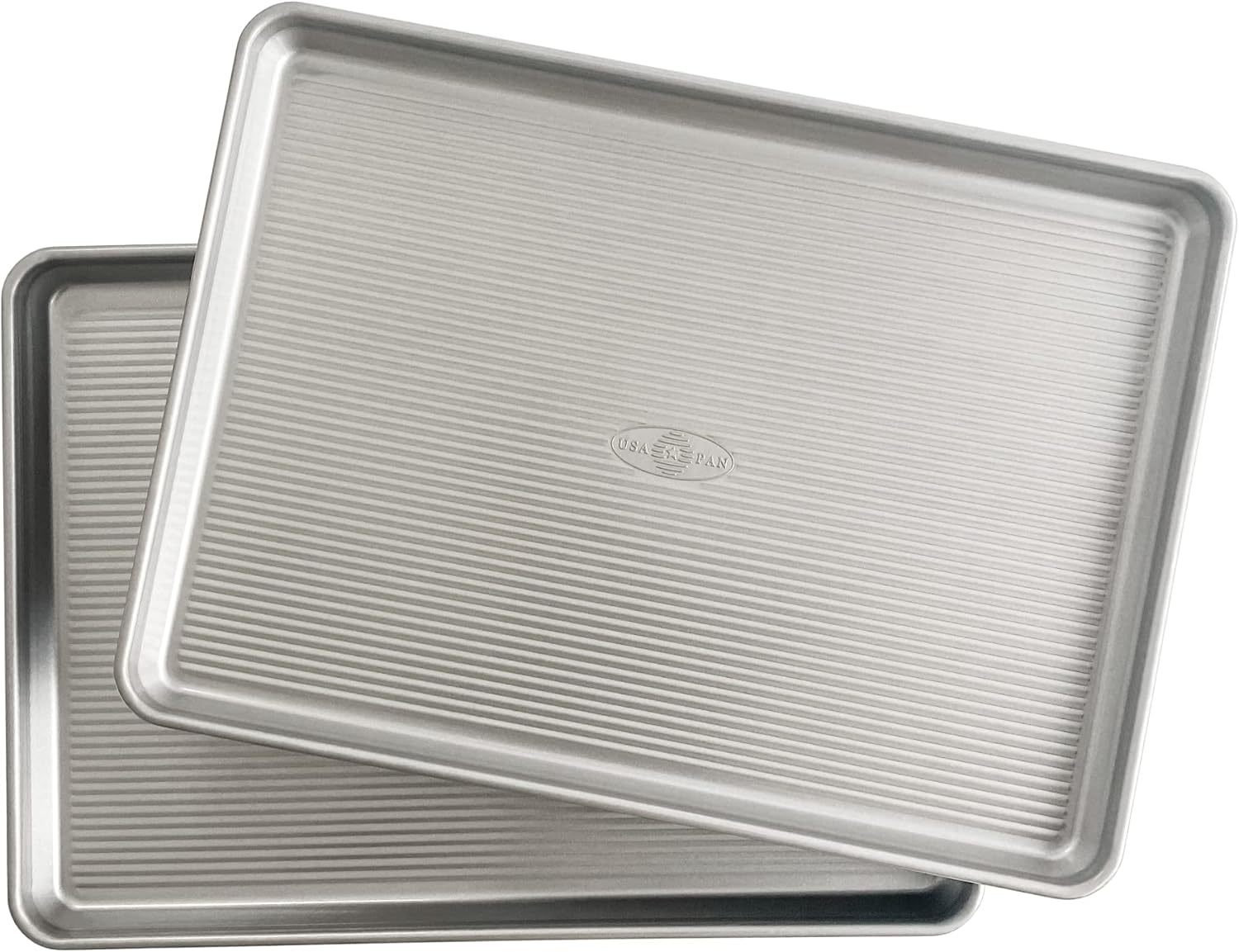 (paid link)
Heavy-Duty Half Sheet Baking Pans (Set of 2)
Heavy-gauge aluminum prevents warping at high heat for even sheet-pan dinners and golden rolls.
 (paid link)
Unbleached Pre-Cut Baking Parchment Paper Sheets
Lies completely flat on baking trays for effortless release with zero sticking and swift cleanup.
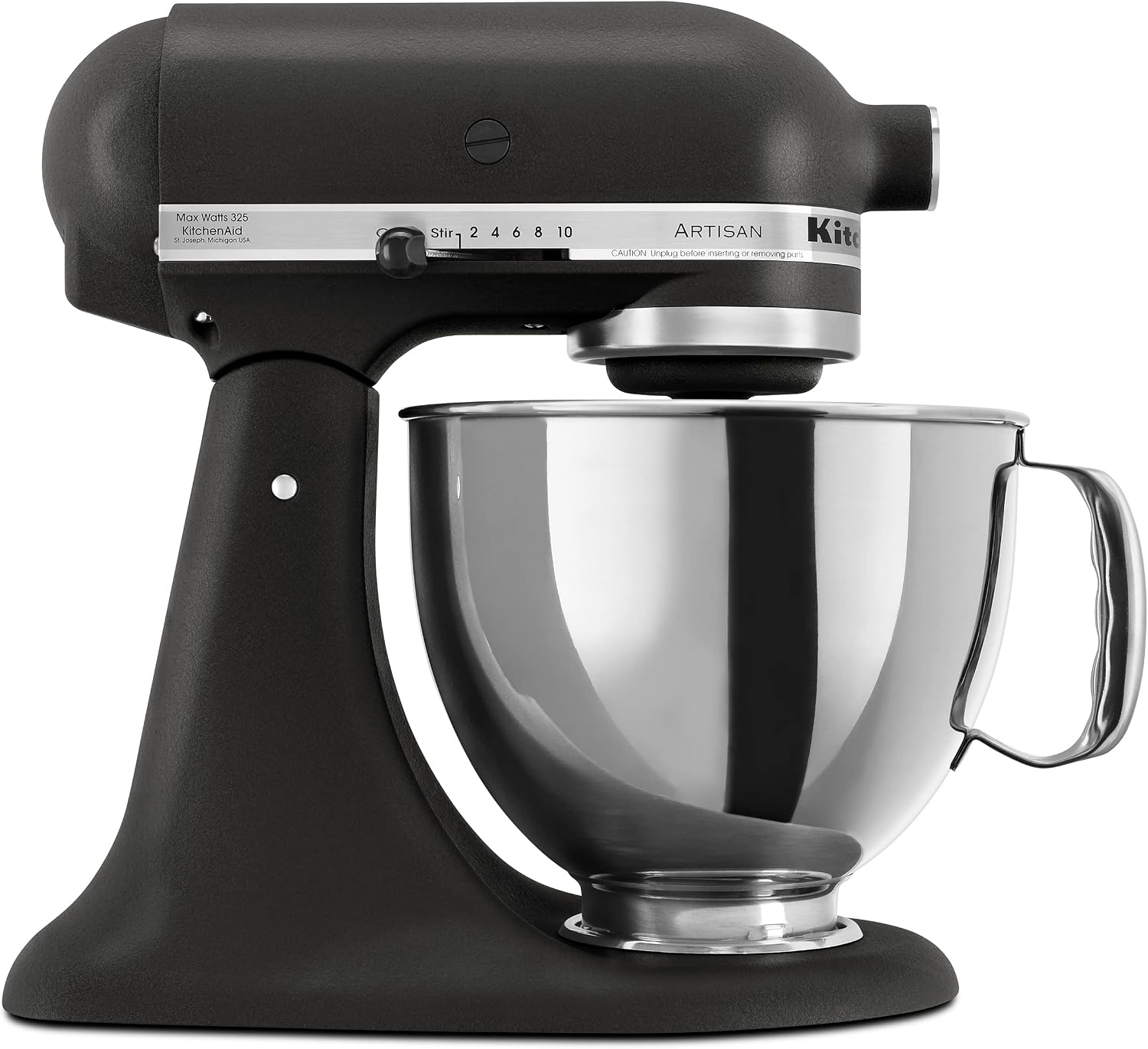 (paid link)
Tilt-Head Stand Mixer (5-Quart)
Whips batters, kneads doughs, and creams butter hands-free for professional-quality baked goods.