Copycat IHOP Buttermilk Pancakes

Thick, fluffy golden buttermilk pancakes with tender centers, melting butter, and warm maple syrup for a classic diner-style breakfast.
Copycat IHOP Buttermilk Pancakes
These copycat IHOP buttermilk pancakes are soft, thick, and golden, with tender centers and lightly browned edges. Buttermilk gives the batter a gentle tang, while baking powder and baking soda help the pancakes rise into a fluffy stack. Serve them warm with butter and maple syrup for a classic diner-style breakfast at home.
The recipe makes four servings and cooks quickly once the griddle is hot. Mix only until the dry ingredients are moistened, rest the batter briefly, and cook over steady medium heat. A few lumps are a good sign that the batter has not been overworked.
Why You’ll Enjoy These Buttermilk Pancakes
This recipe uses everyday ingredients and two bowls. Buttermilk reacts with baking soda to help create a tender crumb, while melted butter adds richness. A short rest hydrates the flour and gives the leavening time to begin working before the batter reaches the griddle.
Ingredients You’ll Need
- All-purpose flour: Provides structure. Spoon it into the measuring cup and level it rather than packing it down.
- Granulated sugar: Adds a little sweetness and helps the surfaces brown.
- Baking powder and baking soda: Create lift; baking soda reacts with the acidity in buttermilk.
- Fine salt: Balances sweetness and keeps the pancakes from tasting flat.
- Buttermilk: Adds tang and tenderness. Keep a tablespoon or two extra in case the batter becomes too thick.
- Egg: Binds the batter and gives the pancakes structure.
- Melted butter and vanilla: Butter adds richness and vanilla gives a familiar breakfast aroma.
- Griddle fat and toppings: Use a little neutral oil or butter for cooking, then serve with butter and maple syrup.
Equipment
Use a large mixing bowl, a second bowl or measuring jug, a whisk, a flexible spatula, and a nonstick griddle or heavy skillet. A quarter-cup measure makes evenly sized pancakes, and a thin spatula makes flipping easier.
How to Make Copycat Buttermilk Pancakes
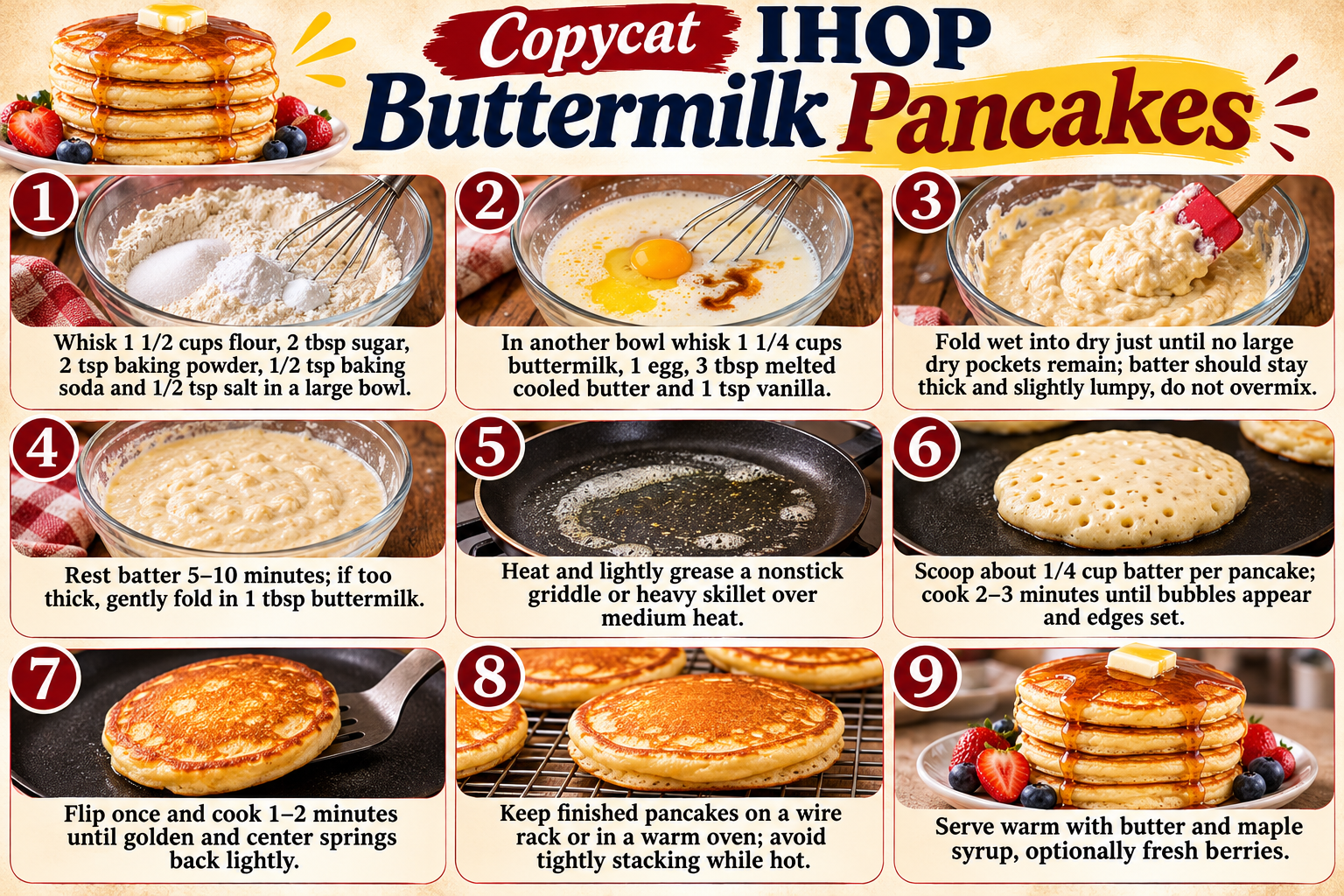
- Mix the dry ingredients. Whisk flour, sugar, baking powder, baking soda, and salt in a large bowl. Break up visible lumps before adding the wet mixture.
- Mix the wet ingredients. Whisk buttermilk, egg, melted butter, and vanilla in a second bowl. Let the butter cool slightly so it does not cook the egg.
- Combine gently. Pour wet ingredients into dry ingredients and fold with a spatula just until no large dry pockets remain. The batter should be thick and slightly lumpy; do not whisk it smooth.
- Rest the batter. Let it stand for 5 to 10 minutes while the griddle heats. If it becomes too thick to scoop, fold in one tablespoon of buttermilk.
- Heat the griddle. Set a nonstick griddle or heavy skillet over medium heat and lightly grease it. A small drop of batter should sizzle gently without browning immediately.
- Cook the first side. Scoop about 1/4 cup batter per pancake, leaving space between portions. Cook 2 to 3 minutes, until bubbles appear across the surface and the edges look set.
- Flip once. Turn with a thin spatula and cook another 1 to 2 minutes until the second side is golden and the center springs back lightly. Lower the heat if the outside browns before the middle cooks.
- Keep warm and serve. Transfer pancakes to a wire rack or low oven while you cook the rest. Avoid stacking tightly while hot because trapped steam softens the browned surfaces. Serve with butter and maple syrup.
Tips for Fluffy, Even Pancakes
Do not overmix. Excess mixing develops gluten and can make pancakes chewy. Rest briefly. This hydrates the flour and activates the leaveners. Use medium heat. If the first pancake darkens before bubbles appear, lower the temperature. Flip once. Pressing down on pancakes squeezes out their air.
Easy Variations
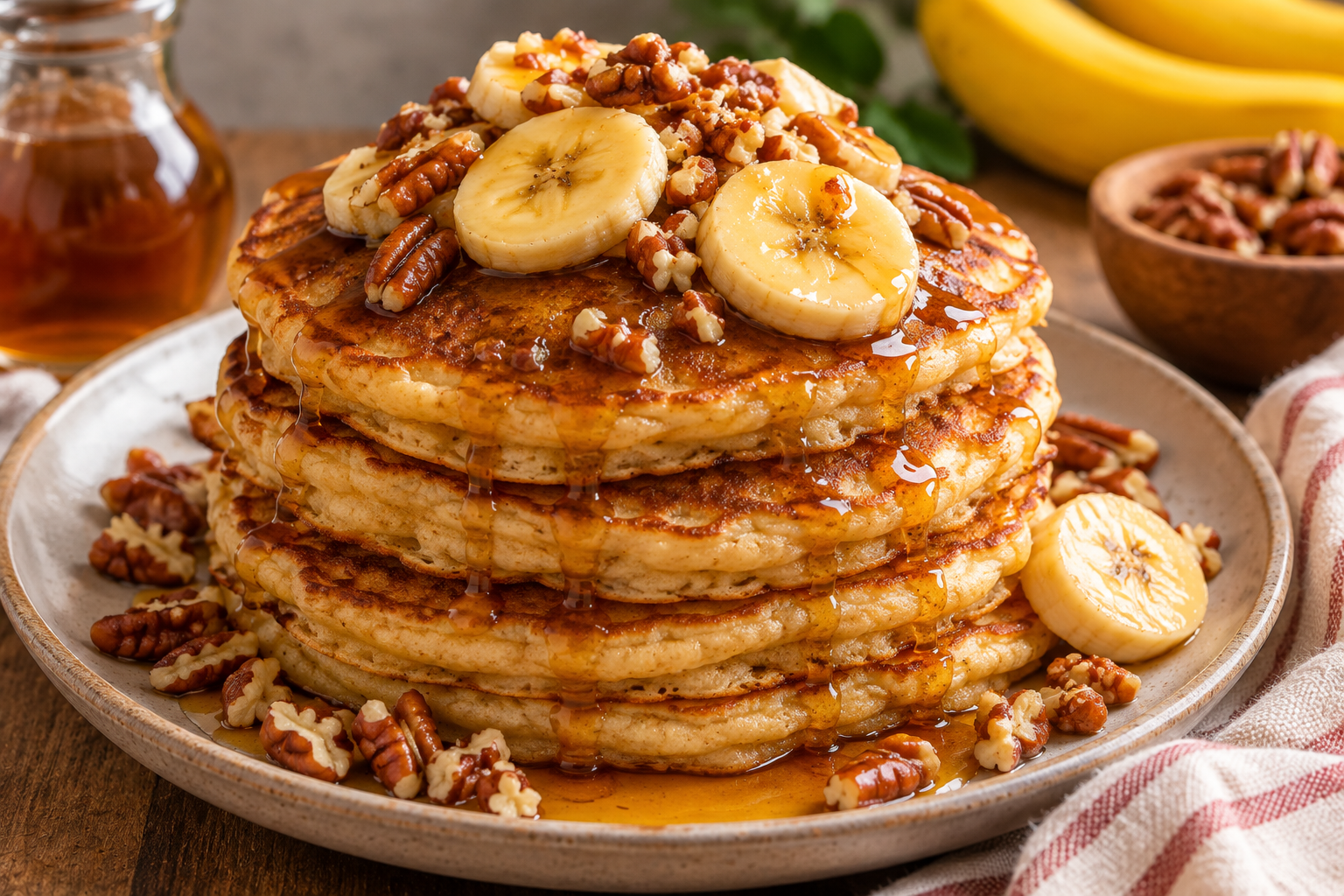
Fold blueberries or chocolate chips into the batter just before cooking. Add lemon zest for brightness or a pinch of cinnamon for warmth. Serve with sliced bananas and toasted pecans. If you do not have buttermilk, a milk-and-lemon substitute can work, although the flavor and thickness may differ.
What to Serve With Pancakes
Pair the stack with scrambled eggs, breakfast potatoes, fresh berries, or yogurt. Maple syrup and butter are classic; honey, fruit compote, or nut butter are easy alternatives.
Make-Ahead, Storage, and Reheating
Cooked pancakes can be cooled on a rack and refrigerated in an airtight container for up to 3 days. For longer storage, freeze in a single layer until firm, then stack with parchment between pancakes in a freezer-safe bag. Reheat in a toaster, toaster oven, or warm skillet. Do not seal pancakes while warm, as condensation makes them soggy.
Frequently Asked Questions
Why are my pancakes dense?
The batter may have been overmixed, the leaveners may be old, or the griddle may have been too hot. Mix gently and check that the baking powder and soda are fresh.
Can I make the batter ahead?
It is best mixed shortly before cooking. You can measure the dry ingredients the night before.
When should I flip?
Wait for bubbles across the surface and edges that look set. The underside should be golden.
A Reliable Diner-Style Breakfast
Fluffy pancakes depend on a gentle hand and steady heat. Keep the batter slightly lumpy, let it rest briefly, and flip once when the surface tells you it is ready.
How Batter Texture Affects the Finished Pancakes
Pancake batter should be thick enough to mound briefly when it falls from the scoop, but loose enough to spread into a round. Flour absorbs liquid as it rests, which is why the batter can become thicker after five minutes. Add the optional extra buttermilk a tablespoon at a time; a little adjustment is better than making the mixture runny. Do not try to remove every small lump. Overmixing develops gluten and can make the pancakes firm instead of tender.
The first pancake is a useful test for the griddle. If it spreads too far, the batter may need a short rest or a little more flour. If the outside becomes dark before bubbles appear, the cooking surface is too hot. If it stays pale and takes a long time to set, increase the heat slightly. Make small temperature adjustments between batches so the remaining pancakes cook consistently.
Keeping a Whole Batch Warm
When cooking for several people, place finished pancakes in a single layer on a wire rack set over a baking sheet in a low oven. The rack lets steam escape and helps the bottoms stay dry. If you stack pancakes immediately, steam becomes trapped between them and softens the browned surfaces. Add butter and syrup only when serving so the pancakes do not absorb the topping while waiting.
Ready to make something?
Turn inspiration into dinner.
Browse our tested recipes for practical step-by-step ideas, weeknight favorites and something delicious to try next.
Find your next recipe →Helpful Tools for This Recipe
Disclosure: Affiliate disclosure: This post contains affiliate links. As an Amazon Associate I earn from qualifying purchases at no extra cost to you.
 (paid link)
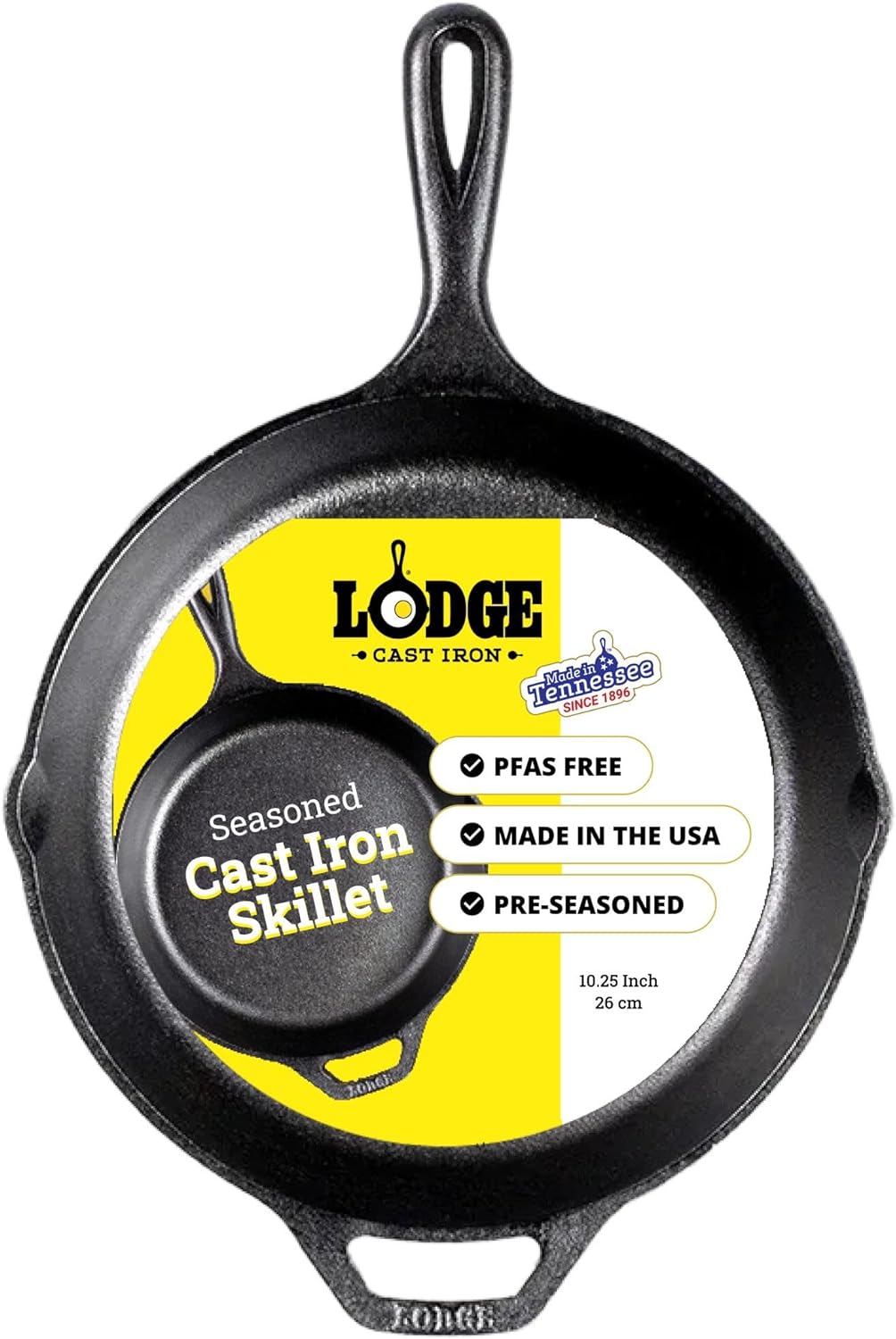
Pre-Seasoned Cast Iron Skillet (10.25-inch)
Retains heat for even browning and gives pork chops a deeply seared crust.
 (paid link)
Heat-Resistant Seamless Silicone Spatula Set
Folds cream gently and scrapes bowls clean while mixing batters and toppings.
 (paid link)
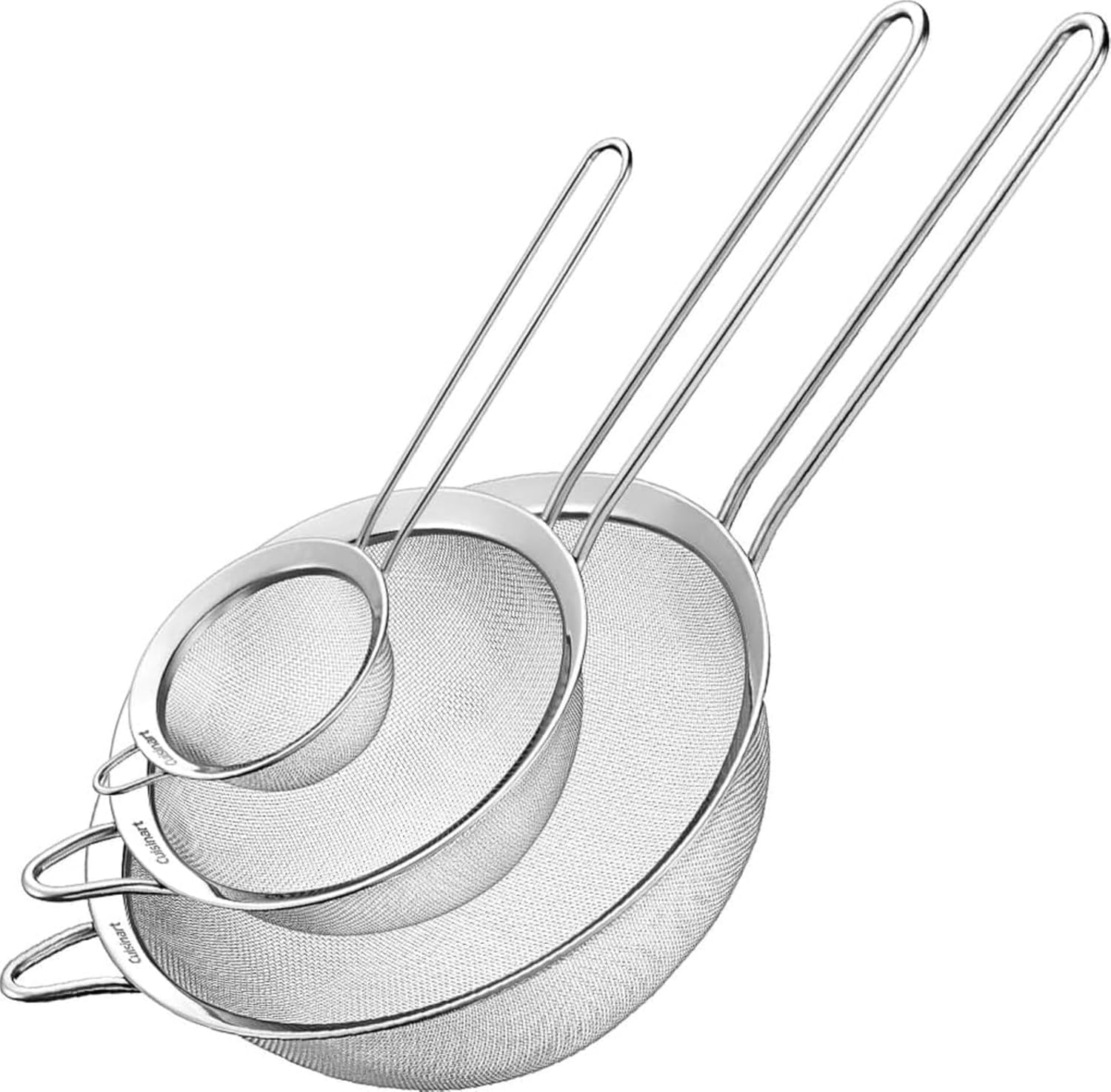
Fine Mesh Stainless Steel Strainer Set (3-Piece)
Sifts cocoa evenly over dessert cups and helps keep the finish light.