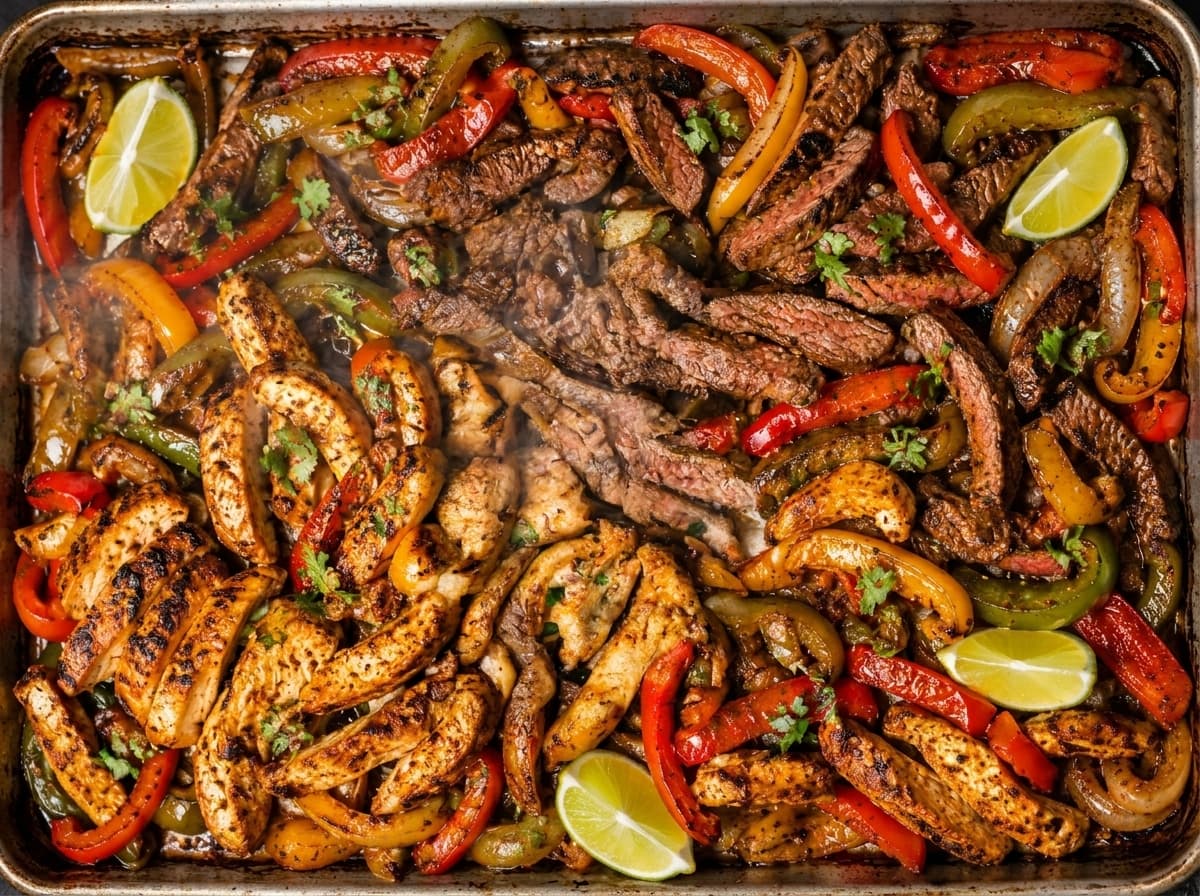
Sheet Pan Fajitas: The Complete Guide (Chicken or Steak)

Sheet pan fajitas are easy, but a few small choices decide whether you get charred and juicy or pale and steamed. Here's everything that matters.
Sheet pan fajitas are one of the easiest weeknight dinners going: slice, season, roast, done. They're also one of the easiest to get slightly wrong. The usual result is pale, watery peppers and chicken that tastes fine but nothing like the sizzling platter you were picturing.
The difference comes down to a handful of decisions. Here they are, in the order you'll make them.
Choosing your protein
Chicken breast is the lean, common choice. Slice it into thin strips, about 1/2 inch, so it cooks in the same time as the vegetables. The trade-off is that it dries out fast if it overcooks.
Chicken thighs are more forgiving. They have more fat, stay juicy, and take a few extra minutes. If you tend to overcook chicken, use thighs.
Flank or skirt steak are the classic steak options. Both are thin cuts with a lot of beefy flavor. Whichever you choose, slice against the grain (perpendicular to the visible muscle fibers) for tender bites. Slice steak thin, about 1/4 inch.
The rule that matters most: don't crowd the pan
Steam is the enemy of char. When food is piled up, moisture from the vegetables has nowhere to go, so everything steams in its own liquid. Spread the chicken or steak, peppers, and onions in a single layer with a little space between pieces. If your pan is small, use two. A half-sheet pan holds about 1.5 pounds of meat and vegetables comfortably.
Oven temperature and timing
Use a hot oven: 425°F (220°C). Roast for about 18 to 22 minutes and stir once halfway. Chicken should reach 165°F in the thickest piece. For steak, cook to your preferred doneness, checking early since thin strips cook fast.
For extra char, switch to broil for the last 2 to 3 minutes and watch closely. The line between charred and burnt is a matter of seconds.
The seasoning blend
Packets are fine, but a homemade blend takes a minute and is easy to adjust. The base is chili powder, cumin, smoked paprika, garlic powder, and onion powder, with salt and pepper. Add cayenne only if you want heat. Toss everything with a few tablespoons of oil directly on the pan so the seasoning coats evenly and the oil helps the vegetables brown.
Finish with fresh lime juice as soon as the pan comes out of the oven. The acid wakes up everything and cuts the richness.
Warming the tortillas
Cold tortillas crack and taste like cardboard. Two easy fixes:
- Skillet: 15 to 20 seconds per side in a dry pan over medium heat.
- Oven: wrap a stack in foil and warm at 350°F for about 10 minutes.
Keep them wrapped in a clean towel until serving so they stay soft.
Toppings worth setting out
Sour cream, guacamole, shredded cheese, salsa, and chopped cilantro are the standard lineup. Pickled red onions add a bright, tangy contrast. Warm black beans and rice turn any leftovers into a burrito bowl the next day.
Make-ahead and meal prep
You can slice the meat and vegetables and mix the seasoning up to a day in advance, keeping each in separate containers in the fridge. Roast fresh for the best texture. Leftover fajita filling keeps for up to 4 days and reheats well in a hot skillet, which brings back some of the char. Microwaving works but softens the vegetables.
Quick troubleshooting
- Watery pan: too crowded, or the vegetables were wet. Dry them and use a bigger pan.
- Chicken dry: slice it thinner, pull it at 165°F, or switch to thighs.
- Bland flavor: season more generously and add lime at the end.
- No char: roast hotter, spread it out, and finish under the broiler.
